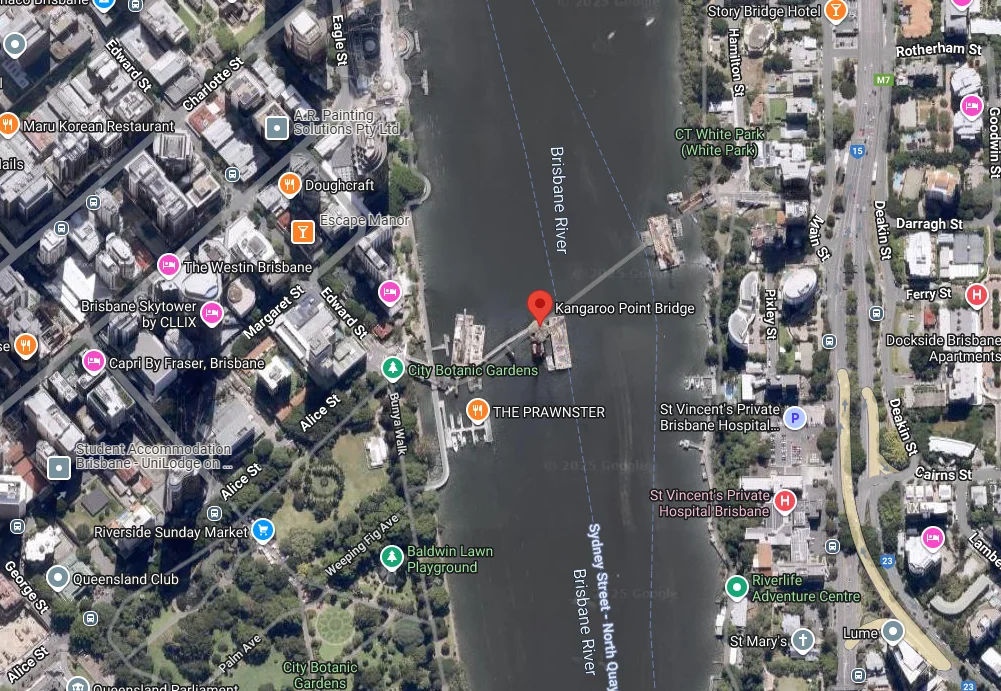



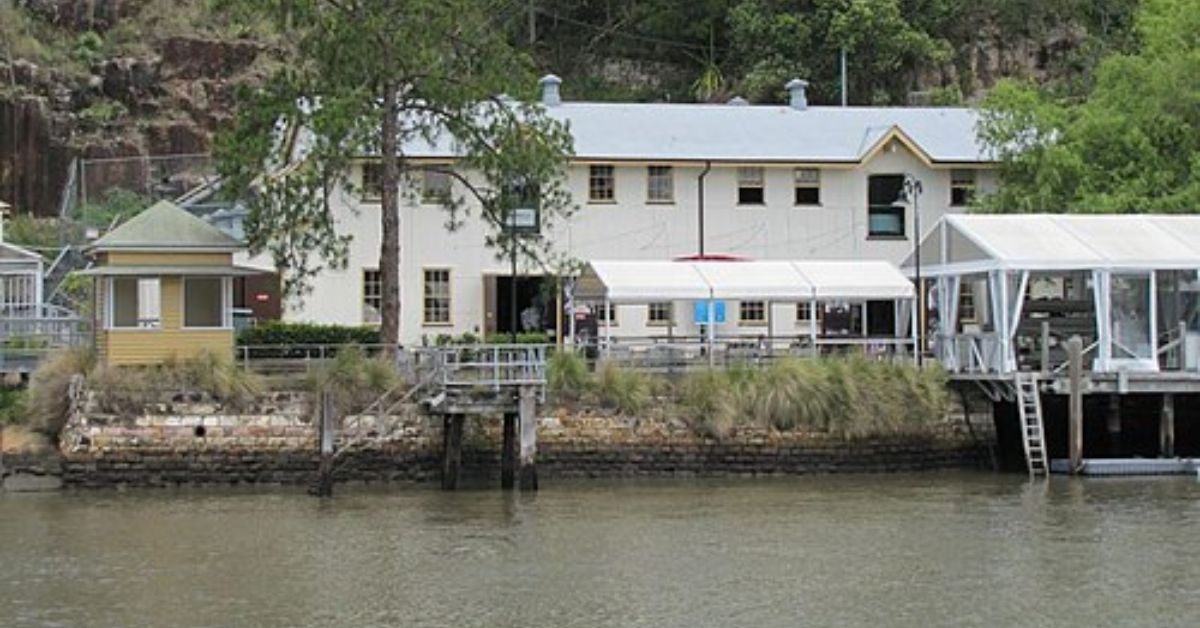
The pontoon at Kangaroo Point’s heritage-listed Naval Stores is among eleven riverfront sites now open to commercial expressions of interest, with operators invited to propose new experiences at designated sites along the Brisbane River ahead of the 2032 Olympic and Paralympic Games.
From floating restaurants and wellness hubs to water sports and river tours, the call for proposals marks the most significant push to activate Brisbane’s river in decades. The pontoon at the heritage-listed Naval Stores is one of three inner-city floating sites added to the process following a market sounding late last year, which drew 16 submissions from operators in Queensland, Victoria, New South Wales, New Zealand and the United Kingdom.
For Kangaroo Point residents who look out at one of the most storied stretches of Brisbane’s waterfront every day, the question now is what form that activation will take.
A Waterfront With a Long Memory
The Naval Stores site at 34 Amesbury Street is already steeped in history. The original complex comprised a pair of two-storeyed iron-clad stud-framed buildings and a wharf, constructed between 1886 and 1888, built at the height of colonial Queensland’s anxieties about Russian naval power in the Pacific. The complex served as the base of the Queensland Navy until the formation of the Royal Australian Navy after Federation, and radio communication history was made in 1903 when the first Australian ship to use wireless telegraphy, HMAS Gayundah, sent signals from Moreton Bay to the Stores.
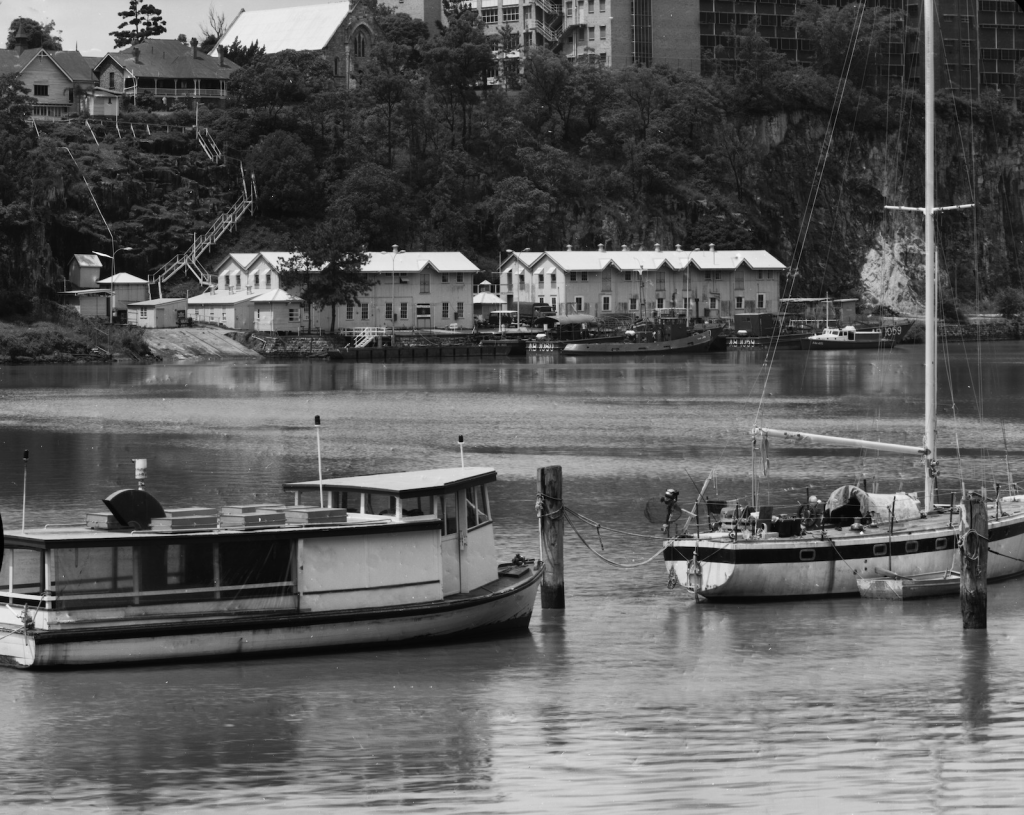
Added to the Queensland Heritage Register in October 1992, the site has been home to adventure company Riverlife since 2005, offering kayaking tours, rock climbing and equipment hire along the famous cliffs. The new push invites operators to bring additional experiences to the water itself, with the three inner-city pontoons described as operational but potentially open to future upgrades depending on what proposals come forward.
What the River Could Become
BCC opened the expressions of interest process on 2 April 2026, with submissions closing at noon on 15 May. The process covers eleven sites across the River Access Network, spanning from Northshore Hamilton to Riverhills. The network includes two major river hubs at New Farm Park and the City Botanic Gardens, capable of handling larger vessels and opening opportunities for dining cruises and expanded tour boat operations, six recreation hubs designed primarily for kayaks and canoes that have remained largely under-utilised, and the three pontoons at Mowbray Park, Newstead Park and Kangaroo Point’s Naval Stores.
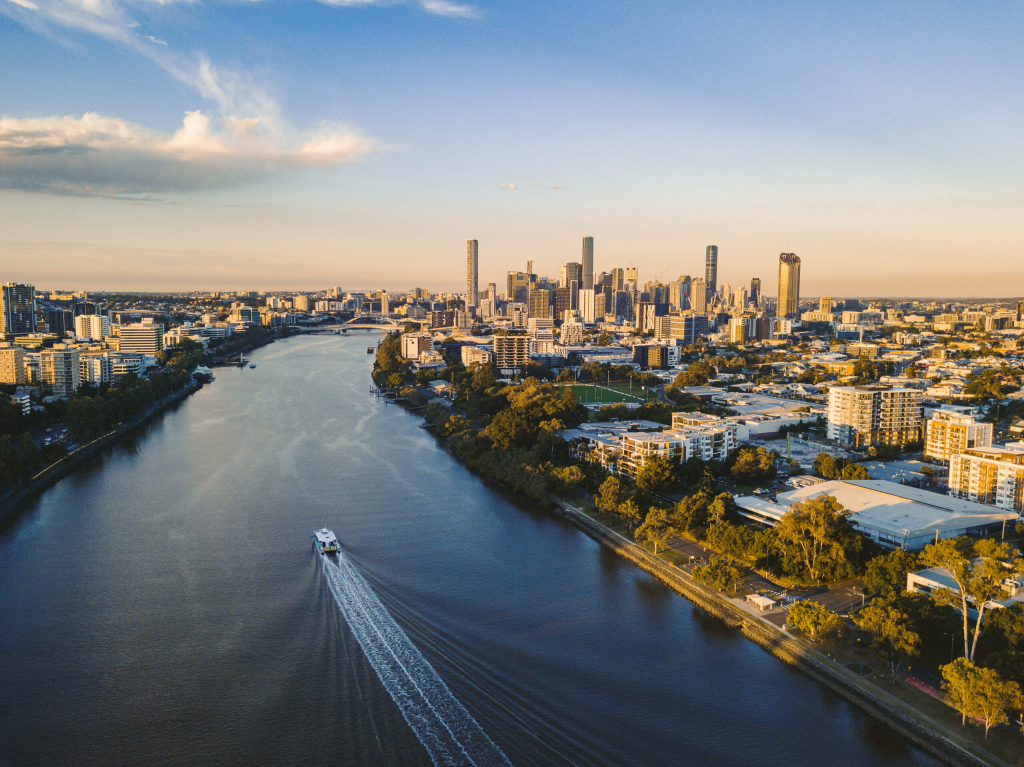
The river has long been treated as a backdrop rather than a destination, despite being one of Brisbane’s greatest assets. There is now a clear push to bring more life and activity onto the water, with calls for bold ideas that can turn the river into a stronger drawcard for the city.
The ambition draws on two historical precedents. Expo ’88 fundamentally shifted how Brisbane related to its waterfront, transforming it from a working waterway into a gathering place. Barcelona’s waterfront transformation ahead of the 1992 Olympic Games produced a precinct that became central to the city’s global identity. With 2032 approaching, the vision is for the Brisbane River to follow a similar arc.
The Numbers Behind the Push
Brisbane’s visitor economy reached a record $17 billion in 2025, according to Brisbane Economic Development Agency CEO Anthony Ryan, driven by visitors staying longer and spending more. Ryan said activating the river directly supported that momentum. “Visitors here for holidays or events already love hopping on a 50-cent CityCat to explore our riverfront precincts,” he said. “As we head towards Brisbane 2032, this will create more to discover at every stop, supporting local jobs, businesses and billions in economic activity.”
Committee for Brisbane CEO Jen Williams identified complexity as the key historical barrier. “The Brisbane River is central to our identity and relaxed, outdoor lifestyle, but due to the complexity of the approvals and authorising environment and the cost to deliver new infrastructure, it has long been under-utilised,” she said. The plan’s use of existing infrastructure, she argued, removes the major barriers that have long stalled waterfront activation.
Approval will be required before commercial operators can begin on any of the sites.
How to Get Involved
Operators interested in submitting a proposal must register through the SAP Ariba supplier portal and request an invitation to participate through the River Access Network tender process. Expressions of interest close at 12 noon on 15 May 2026. Full details can be viewed here.
Published 17-April-2026