


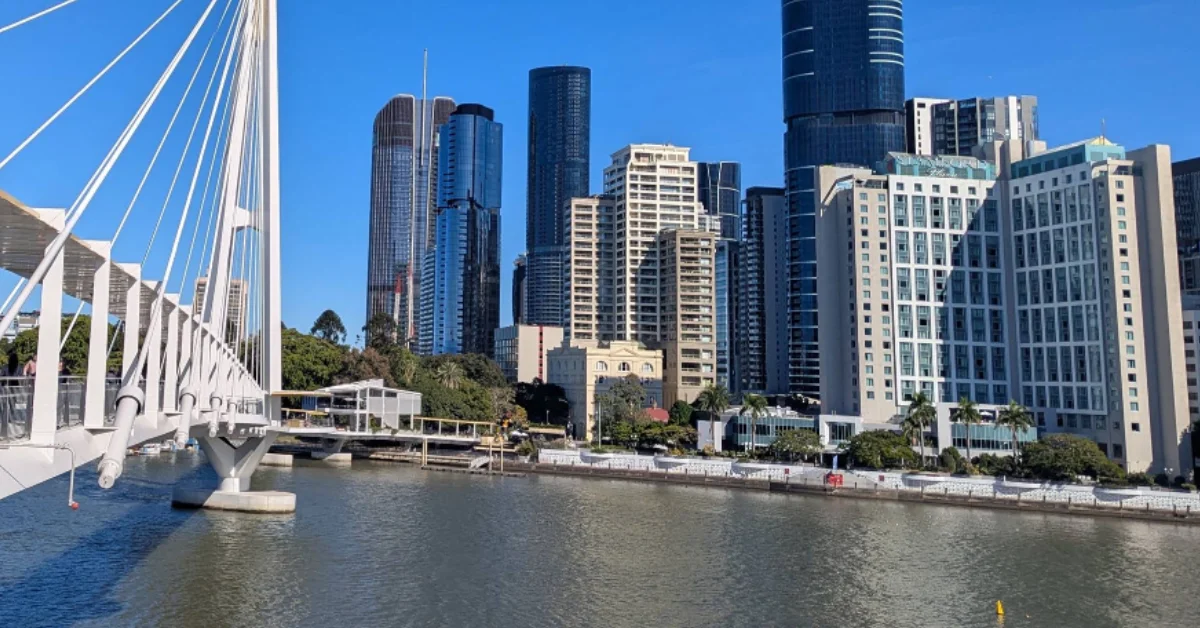
Remembering the Gustnado on the Brisbane River One Year On

A swirling column of wind twisted briefly above the Brisbane River, capturing the attention of onlookers and weather watchers as a violent storm swept across the city. What many believed was a “mini tornado” turned out to be a small but complex weather event. It sparked debate among meteorologists and highlighted the power and unpredictability of Queensland’s storm season.


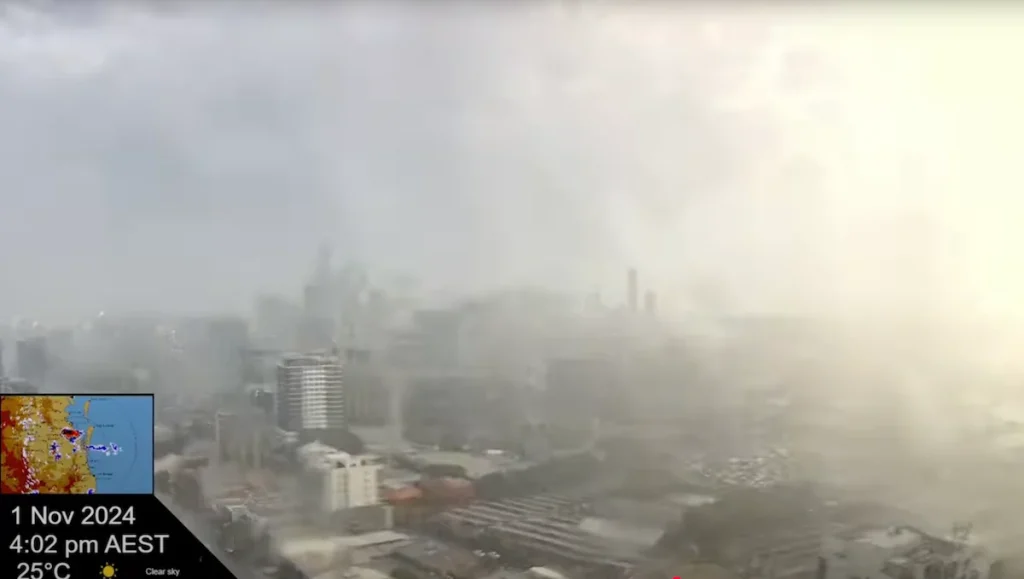
The dramatic scene unfolded on 1 November 2024, around 4:00 p.m., when a powerful supercell thunderstorm moved across South East Queensland, unleashing hailstones up to seven centimetres wide, uprooting trees, and injuring at least one person. 

Amid intense rain and strong winds, a vortex appeared over the river near Kangaroo Point, twisting above the water as cameras captured the spectacle from multiple vantage points.

Storm Over Brisbane: A Violent Afternoon

The weather system responsible for the event was fuelled by a moist and unstable airmass, combined with a southeasterly wind change pushing up the coast. This created the conditions for a supercell thunderstorm, a type of storm with a rotating core that can generate some of the most severe weather in Australia.

By the time it reached Brisbane, the system had already produced 99 millimetres of rain in Cooroy in just 24 hours and caused damage across parts of the southeast. 

As it swept into the city, strong winds felled trees and scattered debris. A man was injured when a falling tree struck him near the riverfront. Yet it was the swirling column of air over the Brisbane River that captured the city’s attention, prompting debate over what exactly had formed above the water.

Gustnado or Tornado? The Debate

While many observers initially believed they had witnessed a tornado, meteorologists at the Bureau of Meteorology (BoM) concluded that the feature was most likely a gustnado, or a short-lived whirlwind generated by turbulent winds along the gust front of a thunderstorm.

According to BoM meteorologist Angus Hines, tornadoes develop when rotation inside the storm extends downward from the cloud base. At the same time, gustnados originate near the ground and are not directly connected to the storm’s main updraft. They tend to be brief and weaker than tornadoes but can still cause localised damage, as seen at Kangaroo Point.

However, some weather enthusiasts analysing footage of the event questioned whether it might have been a weak, anticyclonic tornado — a rare type that spins in the opposite direction to most Southern Hemisphere storms. They pointed to signs of rotation within the cloud base. They noted that the vortex appeared to form behind the rear flank downdraft (RFD) gust front, where tornadoes often develop, rather than on the leading edge, where gustnados typically occur.

Further complicating the picture was the storm’s structure. The supercell’s core rotated cyclonically (clockwise), but the vortex spun anticlockwise. This rotation pattern aligns with gustnado dynamics but has also been documented in rare tornado cases. Research from the NOAA confirms that anticyclonic vortices can occur in cyclonically rotating supercells, though they are uncommon.

A Reminder of Queensland’s Storm Season

Whether gustnado or rare tornado, the Brisbane River vortex underscored the volatility of Queensland’s storm season and the need for awareness as the region moves deeper into spring and summer. Gustnados, while typically less intense than tornadoes, can form suddenly and without warning, posing risks to people and property.

Although Queensland is better known for tropical cyclones, supercell thunderstorms, and the dramatic phenomena they sometimes produce,  are not unusual in the region.


Residents who saw the swirling column above the river said this was a striking reminder of nature’s power. Lasting only moments, it nevertheless became part of the city’s shared memory — a fleeting event that left scientists, storm chasers, and the community alike talking long after the skies had cleared.

Published 13-Oct-2025

Brisbane Couple Turns to Dockside Marina Living to Beat Rising Rents

During a conversation with Nat and Shirvo on Sunrise on Tuesday, Grant and Louise Cause recounted how they have found a way to sidestep the housing crisis by swapping a traditional apartment for life on a $250,000 houseboat, cutting their weekly housing costs by hundreds of dollars while enjoying river views and a close-knit community.


From Rising Rents to River Living

About 18 months ago, the couple moved onto a houseboat at the Dockside Marina, after rent increases across Queensland made city living too costly. They wanted a long-term solution that fit their budget and lifestyle. 

After researching options, they decided to buy a houseboat as an affordable asset. Docked at Dockside Marina, they pay about $500 a week in mooring fees )which include electricity and water), plus maintenance and insurance. A comparable apartment nearby costs around $700 a week, giving them an annual saving of about $10,400.

Living on the Water

The Causes describe their houseboat as a two-bedroom home with modern amenities and laundry facilities. They said they have settled easily into life on the river and enjoy its peaceful rhythm. 

The move has given them better access to public transport and city activities. Louise Cause said the marina community has been one of the best parts of their new lifestyle. They have formed friendships with neighbours who share the same appreciation for river living.

A Housing Market Under Pressure

The couple’s move comes as housing prices across Australia continue to rise. Property data shows national home values grew by 0.6 per cent in July, marking six straight months of increases. The median home price now sits at about $927,000 in capital cities and $689,000 in regional areas. 

With recent rate cuts from the Reserve Bank, experts expect further price growth. In this climate, options like houseboats, tiny homes, and shared living are attracting more Brisbane residents seeking affordable housing.

Life at Dockside Marina

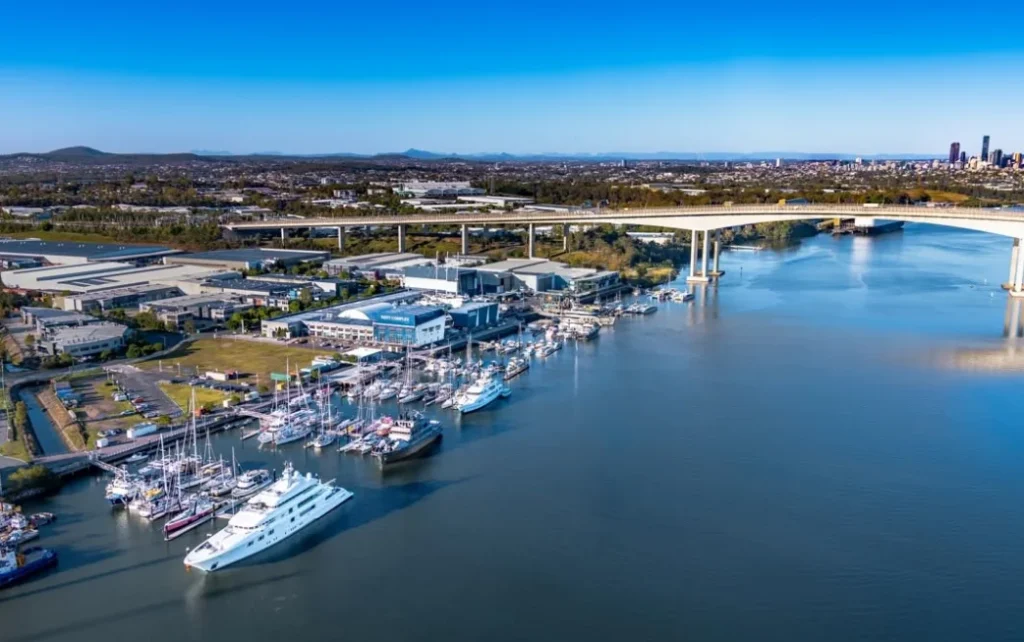
Dockside Marina sits on the Brisbane River and provides permanent berths with power, water, and waste services. Residents describe it as peaceful and convenient, with easy access to the CBD and Kangaroo Point. 


For the Causes, living there has become more than a short-term fix. They plan to stay long-term, valuing the financial relief and strong community connection.

Source: 7NEWS. Click to find the original article here: ‘Brisbane couple reveal the creative way they save $10,000 a year in rent amid Australia’s housing crisis. (7-October-2025)’

Published 9-October-2025

Public Divided Over Kangaroo Point Flying Fox Proposal

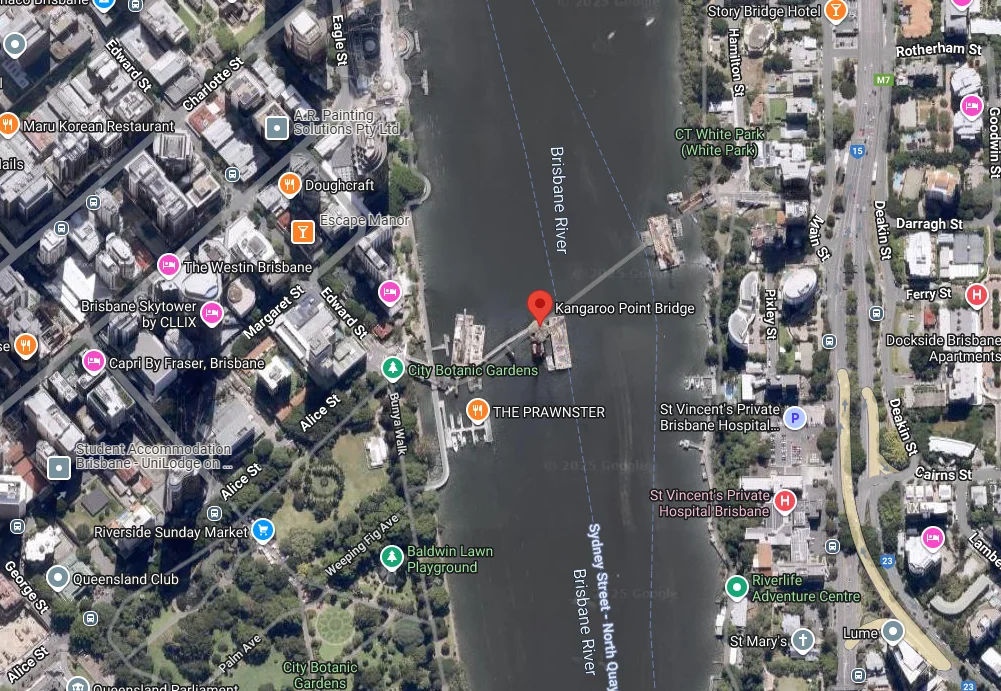
Public opinion is divided over a proposal to build a wheelchair-accessible flying fox across the Brisbane River, linking Kangaroo Point with the CBD.


Public Reaction and Background

The concept of a flying fox at Kangaroo Point is not new. Brisbane tourism operator John “Sharpey” Sharpe first floated the idea in 2004 and has continued to pursue it as part of the city’s tourism offerings. The plan has now been revived through the Destination 2045 Tourism Icons Investment Fund, which has $80 million set aside for approved projects.

The attraction would involve participants being harnessed to a dual-line system for a glide from the Kangaroo Point cliffs to the city, with the return trip via the Kangaroo Point Green Bridge, which opened on 15 December 2024. Sharpe has described it as the world’s first flying fox designed from the outset for wheelchair users, drawing on earlier adaptive systems used in his Vertigo dining experience.

While the proposal has been under development for years, the announcement that it could be ready ahead of the Brisbane 2032 Olympic and Paralympic Games has reignited debate. Supporters welcomed the concept as a step toward positioning Brisbane as a leading adventure destination, while critics voiced concerns about its practicality and relevance.

flying fox proposal
Photo Credit: Google Maps

Community Sentiment

Supporters have praised the project as an exciting addition that would showcase inclusivity and create a unique tourism experience. Some online comments described it as “cool” and “awesome,” while others said they hoped it would go ahead.

Critics raised safety concerns, questioning what would happen in the event of a fall and pointing to the condition of the Brisbane River, with references to debris, water quality, and wildlife. Others said the proposal was unnecessary, arguing funds should instead be directed to infrastructure improvements such as roads and bridges.

Questions were also raised about why the idea, first proposed in 2004, had not been realised sooner.

Kangaroo Point flying fox
Photo Credit: Space4cyclingbne/Facebook

Accessibility and Engineering

Accessibility is central to the design, with features intended to allow wheelchair users to take part safely and comfortably. The plan builds on the success of adaptive systems developed for the Vertigo restaurant at Brisbane Powerhouse, where a liftable wheelchair was created to give mobility-impaired guests access to the suspended dining platforms.

Early engineering work has already been undertaken, including assessments to avoid vegetation removal along the Kangaroo Point cliffs. Sharpe has also outlined additional ideas for the precinct, including a climbing “sky ladder” and a high ropes course.

Timeline and Next Steps


The flying fox proposal will require consultation, environmental assessment, and statutory approvals before it can proceed. Sharpe has indicated he wants the attraction operating years ahead of the Brisbane 2032 Games, to ensure adequate preparation and operational experience.

Published 30-Sep-2025

Toll Considered as Story Bridge Faces Expensive Restoration

Kangaroo Point’s iconic Story Bridge could soon see tolls return for the first time in nearly 80 years, as the city faces a multi-million-dollar restoration challenge to keep the ageing structure safe for future use.


Read: Story Bridge Footpaths Closure Forces Thousands into Difficult Commute


An independent review has revealed the scale of the challenge ahead, suggesting that a full restoration is essential to keep the bridge safely operational for future generations. However, the price tag attached to this restoration is well beyond the financial means of Brisbane alone.

story bridge
Photo credit: Phil Dooner/Google Maps

In response, several funding options are being considered, including a revival of tolls, which haven’t been seen on the bridge since the 1940s. Other ideas on the table include a coordinated funding approach between council, state and federal governments, the introduction of a special rates levy, or support from corporate sponsorship. 

“In recent years, we’ve invested $80 million in critical restoration work. But with 42% of bridge traffic coming from outside Brisbane, it’s only fair that other levels of government pitch in,” said Cr Adrian Schrinner.

While the return of tolls would be unpopular with many commuters, it remains one of the few viable ways to fund the extensive works required.

story bridge
Photo credit: Andrew Smith/Google Maps

The committee tasked with assessing the bridge’s condition also found urgent repairs needed for its pedestrian pathways. A recent structural review—conducted after a tropical cyclone—uncovered more severe damage than previously understood, with water seeping through parts of the concrete structure.

Despite years of ongoing maintenance, experts believe the bridge has reached a point where only a large-scale restoration can guarantee its future. The task ahead is not just one of engineering, but also of political and financial cooperation. Without a committed partnership across levels of government and community support, one of Brisbane’s most recognisable landmarks may face a very different future—possibly one with toll booths once again.


Read: Veteran Police Officer Injured on Story Bridge: Community Rallies with Fundraiser


As the city considers its options, the Story Bridge remains a powerful symbol—not just of Brisbane’s past, but also of the tough choices needed to secure its infrastructure for the years to come.

Published 13-May-2025

Kangaroo Point to Gain Clifftop Apartments Under New Proposal

A new eight-storey boutique apartment building proposal has been submitted for the development planned for 14 and 24 Paton Street. The proposal would build 18 units on a 963-square-metre site overlooking the Brisbane River.


Photo Credit: DA A006638536

Rodrigues Property Group is behind the project, which acquired the two adjoining lots in 2022 and 2023 for $4.5 million. Designs by HAL Architects show a mix of two- and three-bedroom apartments, with parking for 37 cars and 21 bicycles in the basement.

This new proposal replaces a previous plan for two smaller, five-storey buildings comprising only four apartments each.  The developers have stated that the previous design was no longer financially viable due to rising construction costs.  

Photo Credit: DA A006638536

While exceeding the current height limit for the area, the new design is being presented as a performance-based outcome that improves construction efficiency and site planning.

The developers argue that the project aligns with the Kangaroo Point Neighbourhood Plan and the Brisbane Housing Supply Action Plan, encouraging inner-city development to address housing shortages.  


If approved, the development will replace two existing houses on the site.

Published Date 29-October-2024

Mysterious Mass Deaths Along Brisbane River: Kangaroo Point’s Perplexing Enigma

Hundreds of dead fish and crustaceans have mysteriously appeared along the banks of the Brisbane River, prompting concerns among residents and fish experts. This unsettling phenomenon was observed at various locations, including Kangaroo Pont, Milton, West End and Indooroopilly, casting a cloud of uncertainty over the river’s health.


Whilst government officials initially suggested alternative causes, renowned fish expert and University of Queensland associate professor Ian Tibbetts has raised concerns of a toxic spill as the more probable culprit. 

Despite recent heavy rainfall and subsequent freshwater spillovers, the deceased species, which include mullet, bream, catfish, and even some mud crabs, are known for their resilience to freshwater conditions. 

Professor Tibbetts emphasised, however, that this incident is “not directly related to the recent flooding.” This revelation has intensified worries about localised contamination or a toxic event in the area.

Passers-by and residents were the first to encounter this perplexing spectacle on Thursday 1 Feb 2024, as dead fish and crustaceans were found stranded amidst rocks and in the river waters. The incident has been reported to the authorities. The Department of Environment, Science, and Innovation is actively investigating these reports.

They suspect low dissolved oxygen levels due to recent heavy rain, possibly washing organic matter into the Brisbane River, as a potential cause for the deaths. However, the investigation is ongoing, leaving the mystery of the mass deaths unresolved for now.


In light of these events, authorities advise residents and fishers to exercise caution and avoid touching or consuming any of the deceased animals found along the riverbanks.

Published 6-Feb-2024

New Kangaroo Point Green Bridge: A Feat of Engineering

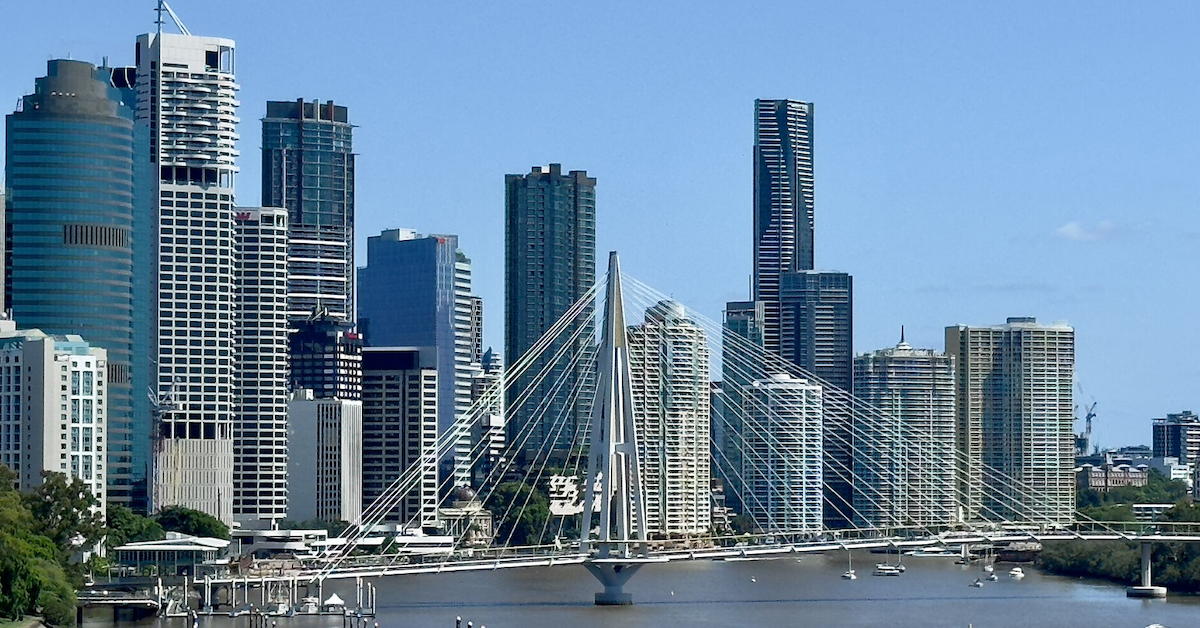
The construction of the new Kangaroo Point Green Bridge has reached a significant milestone with the successful installation of a 95-metre-high tower mast.


The operation was carried out by Marr’s heavy-duty tower crane, a 330-tonne Favelle Favco M2480D, which was installed on a platform in the middle of the Brisbane River.

The crane, equipped with a 64-metre jib, can lift its maximum capacity at a 15-metre radius, or take 100 tonnes to a 45-metre radius with a hook height of around 130 metres. This impressive lifting capacity enabled it to hoist the 25-metre-high, 180-tonne prefabricated steel masthead to a height of 95 metres.

The mast is the heaviest lift to be undertaken on the project, where the crane has already completed more than 10 major lifts during the first 12 months of the job.

The contract to build the bridge was awarded in 2021 to Connect Brisbane, a Besix Watpac led consortium. The consortium involved Marr at an early stage in the design phase, to develop a lifting strategy that supported their preferred construction methods for the project.

Project director, Rowan Riggall, praised the in-house engineering team for identifying the M2480D as the most suitable crane in the Australian market capable of lifting the fully assembled masthead.

Managing director, Simon Marr, highlighted the benefits of modularised construction with fewer, heavier lifts, stating it not only helps to deliver a safer, more productive site, but also allows the client to share the economic benefit delivered by the project.

The new bridge, an initiative of Brisbane City Council, will be an iconic landmark destination connecting Brisbane’s Central Business District with the eastern suburbs. At a length of 460 metres, the bridge will be among the longest span cable stay pedestrian and cycle bridges in the world. Construction is due to be completed in 2024.


More than 240 metres of the Bridge’s spans have been installed, passing the halfway mark across the Brisbane River. The cost of the project was initially estimated at $190 million but has been revised a few times and is now $299 million.

This project represents a significant achievement in engineering and construction, and is a testament to the innovation and dedication of all parties involved.

Published 26-January-2024

GoBoat Picnic Boats Now Available in Kangaroo Point

Did you know that GoBoat has finally launched its fleet of new eco-friendly picnic boats at Dockside Marina in Kangaroo Point? The best part? They’re pet-friendly! 


GoBoat, a boating company from Denmark, has finally released its series of Scandinavian-designed picnic boats across the Brisbane River, and now that they’re open to the public, all of Brisbane is invited to come give them a spin — no licence required. 

Though construction isn’t finished for their upcoming permanent venue along Breakfast Creek, the company has opened a limited-time pop-up venue at Dockside Marina in Kangaroo Point to give Queensland a taste of what the vessels this Danish company has to offer.

Photo credit: Instagram/GoBoat Brisbane

These boats have been designed to be eco-friendly and environmentally sustainable. Their German electric engines do not produce any smog, nor do they make loud and disruptive noises — a combination which makes for a peaceful cruise down the Brisbane River.

Each boat stands 18 feet long, fashioned from recycled materials such as reclaimed wood and PET bottles. Shading will be installed to shield those aboard from the elements.

Photo credit: Instagram/GoBoat Brisbane

Those interested in renting the boats can do so for the price of $109 an hour, $189 for two hours, and $229 for three hours. Food, beer, and other beverages from outside can all be brought aboard these boats, and customers are allowed to bring their pets along for the ride. Up to eight passengers will be able to fit in a single vessel which makes these boats ideal for group picnics. 

Photo credit: Instagram/GoBoat Brisbane

Though the official launch of GoBoat Brisbane in their permanent site at Breakfast Creek has yet to be announced, their pop-up placeholder is located at Dockside Marina at 44 Ferry St, Kangaroo Point. For more information, visit their website here. Follow their social media accounts on Facebook and Instagram for the latest updates and announcements concerning the upcoming picnic boats. 

Make Waves with Riverlife’s New Water Bikes for Hire

Get ready to make waves at this latest leisure activity in Brisbane! If you’re looking for a fun thing to do or something you’ve never done before then the water bikes for hire at Riverlife will not disappoint.

These water bikes aren’t like the boxy paddle boats that have been popular for a while. They work like standard bicycles, easy to use and navigate at a regular speed of fewer than 20 kilometres per hour or depending on how fast and strong you can pedal.


Because you’re biking on water, the ride is swift and smoother without traffic congestions, potholes and everything else that makes biking on the road so frustrating. You’ll get a full workout, as well as a short trip around Brisbane’s beautiful riverside, within a 30-minute hire. 

Photo Credit: Riverlife/Facebook

If you’re not up for getting wet, the water bikes are extremely stable and won’t create a splash…unless you’re up for jumping in the water. 

Rest assured, safety precautions will be observed at Riverlife whilst safety briefings will be conducted by well-trained staff before you hop on that bike. Riders will get a personal floatation device and sunscreen as well.


Are you thinking of setting up a race with your friends? Water bike hire sessions are open every Wednesday to Sunday. Booking online in advance is encouraged.