
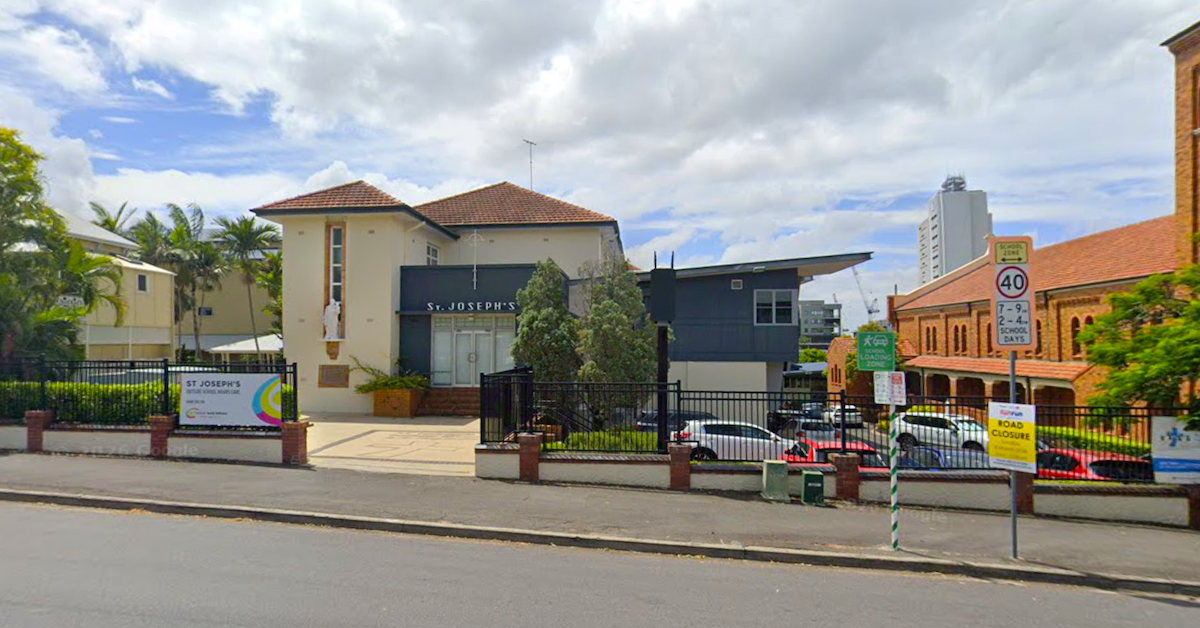
How St Joseph’s School Became Part of Kangaroo Point’s Early History

Kangaroo Point’s St Joseph’s Primary School began in a small cottage more than 150 years ago, teaching children from Brisbane’s working-class neighbourhoods before finding its permanent home on Leopard Street.


Read: Handcrafted Timber Cross Highlights Kangaroo Point History in Regional Exhibition


The school was founded by Mary MacKillop in 1870, initially operating in Hubert Street at One Mile Swamp, the area now known as Woolloongabba. Its relocation to Kangaroo Point in January 1871 began a connection with the suburb that continues today.

A classroom in One Mile Swamp

The first St Joseph’s School opened on 28 March 1870 with more than 70 children enrolled. By the end of its first year, that number had grown to about 90, reflecting the demand for schooling in Brisbane’s developing southern suburbs.

Mary MacKillop, who had established the Sisters of St Joseph of the Sacred Heart with Father Julian Tenison Woods, accompanied Sisters Teresa Maginnis and Josephine Carolan on the school’s opening day. The two sisters continued teaching during its first year.

Education was a central part of the Josephite mission, particularly for children whose families had limited means. Brisbane’s early Josephite schools were established in working-class districts, where access to schooling was an important concern.

A new home on Leopard Street

In January 1871, the school moved into a newly constructed timber church in what was then Leopold Street, later renamed Leopard Street.

The building was basic, with unlined timber walls and a shingle roof. It served both religious and educational purposes, allowing the growing Catholic community to use the same premises for worship and lessons.

The move placed St Joseph’s in a neighbourhood shaped by shipbuilding, foundries, sawmills and other riverside industries. Kangaroo Point was also closely connected to Brisbane’s arrival of migrants by ship, bringing newcomers into an area where working families were already establishing their homes.

The teaching sisters faced their own practical challenges. Initially based in South Brisbane, they travelled to their schools before renting accommodation closer to their pupils. After the move to Kangaroo Point, the sisters occupied a house on River Terrace near Paton Street.

Mary MacKillop’s connection to the community

Mary MacKillop left Brisbane in March 1871, but her involvement in the school extended beyond its establishment.
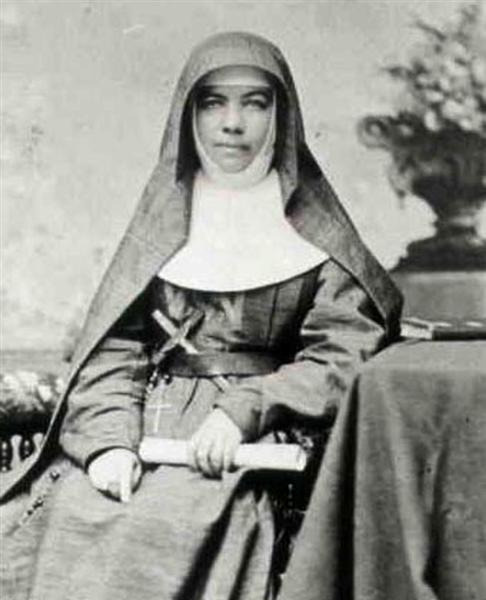
Photo Credit: Wikimedia

The school’s historical account records that she returned to Brisbane several times during the 1870s and probably visited St Joseph’s on those trips. Her presence at the school’s original opening is documented, although later visits to the Kangaroo Point site are less certain.

By 1879, enrolments had reached 120 children. The increase came as Kangaroo Point developed into a more established residential and industrial district, with the school providing continuity for Catholic families in the neighbourhood.

When the Sisters of Mercy took over

A disagreement between Mary MacKillop’s order and Brisbane’s Bishop James Quinn eventually led to the withdrawal of the Sisters of St Joseph from the school in 1879.

The Sisters of Mercy assumed teaching responsibilities in 1880, initially travelling each day from All Hallows to Kangaroo Point. Their involvement marked a new chapter in the school’s history while maintaining its longstanding commitment to Catholic education.

A convent was established by the end of the 1880s, giving the sisters a permanent base close to the school. The former convent survives at 88 Lockerbie Street and is recognised on Brisbane’s local heritage register.
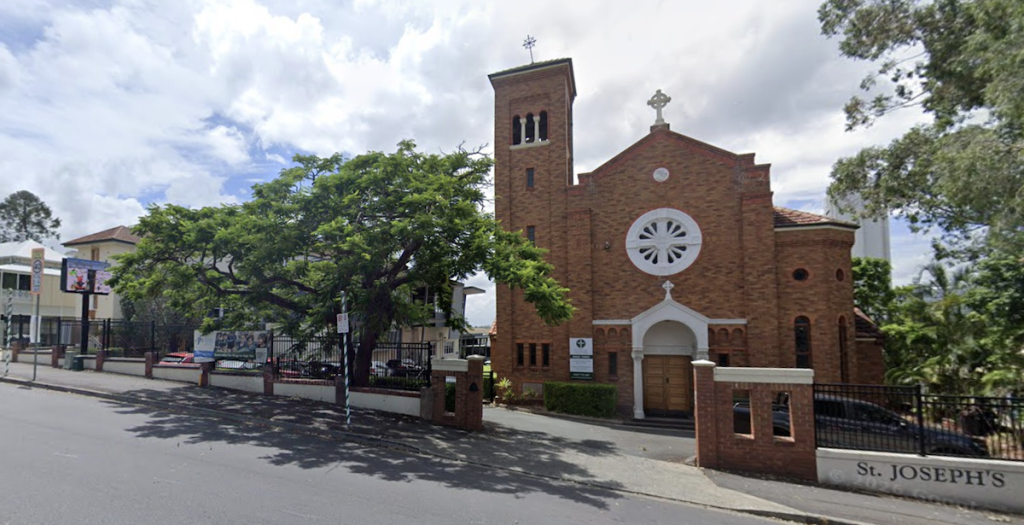
Photo Credit: Google Maps

St Joseph’s continued growing through the early twentieth century. By 1914, the school had 439 children on its roll, a considerable increase from the small group taught in the original Woolloongabba cottage.

A school that followed the suburb’s changes

The school underwent several changes as Kangaroo Point developed. The foundation stone for its three-storey school building was laid in November 1950, while further improvements took place during the 2000s and 2010s.

The Sisters of Mercy ended their presence in the school community in 2015, closing another chapter in its history. Their educational traditions, alongside those of the Josephites, remain part of the school’s identity.

Today, St Joseph’s serves families from Kangaroo Point, East Brisbane and surrounding areas. Its history reaches back to a time when the neighbourhood was built around riverside industries, migrant arrivals and the families who made their lives there.


Read: Over a Decade of Greenery: How Kangaroo Point Park Reshaped an Educational Site


For residents passing the school on Leopard Street, the site represents more than a longstanding educational institution. It is one of the links between present-day Kangaroo Point and the working-class community from which the suburb developed.

Published 26-Oct-2026
The Barefoot Kangaroo Point Schoolboy Who Went to War

The Barefoot Kangaroo Point Schoolboy Who Went to War

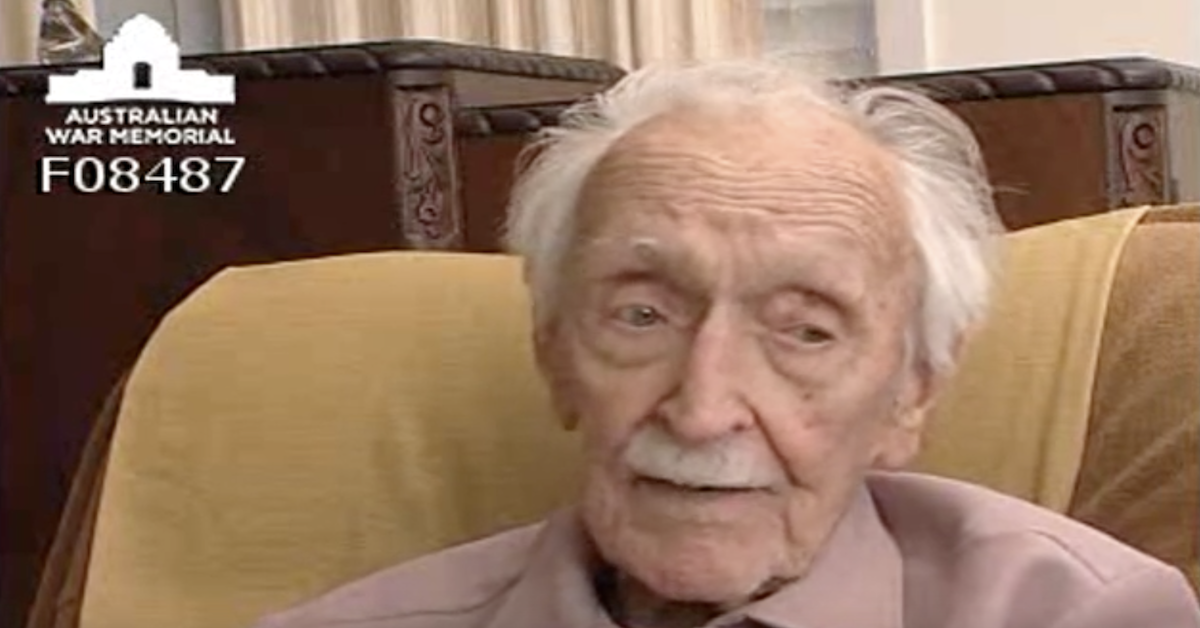
Long before Ted Smout became Queensland’s last surviving First World War veteran, he was a barefoot Brisbane schoolboy making a determined daily journey to Kangaroo Point.

New research into Smout’s 106-year life has brought renewed attention to his early years at Kangaroo Point State School, where he remained a pupil even after his family moved back to Dutton Park. Smout continued making the journey for about six months because he hoped to win the school’s dux medal.

A long walk to school

Smout was born in Brisbane in 1898 and spent his childhood in several inner-city neighbourhoods. His family lived in Woolloongabba and Dutton Park before moving to Kangaroo Point, where he attended the local state school.

When the family returned to Dutton Park, Smout did not immediately follow them to another school. He later recalled walking about two miles each way to Kangaroo Point State School, barefoot, for another six months.

The reason was competition. Smout wanted the dux medal and believed he had a chance of winning it if he remained at the school. The prize ultimately went to another pupil, but the journey became one of the childhood stories Smout would still remember many decades later.

From classroom to uniform

At 16, Smout began working as a junior clerk in Queensland’s Audit Office. War had broken out in Europe, and within a year he was trying to enlist.

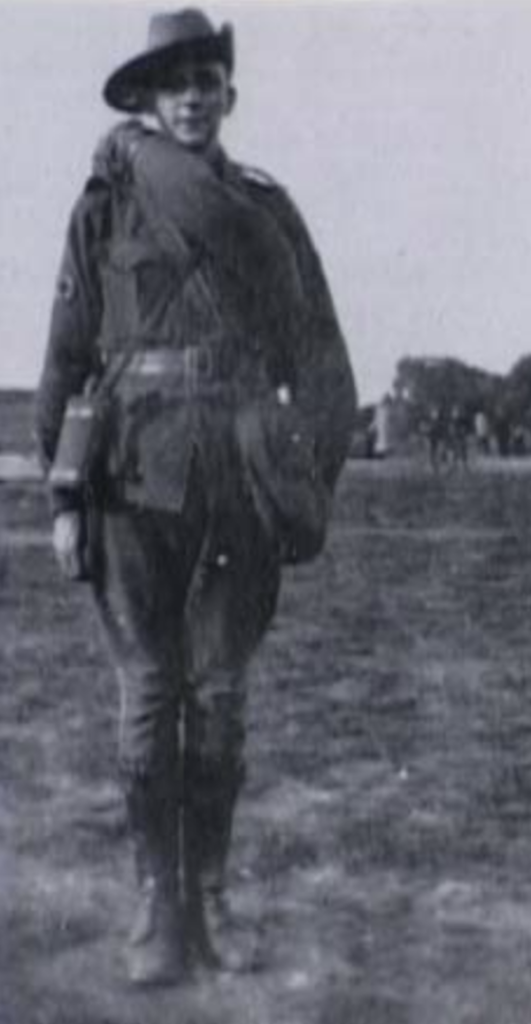
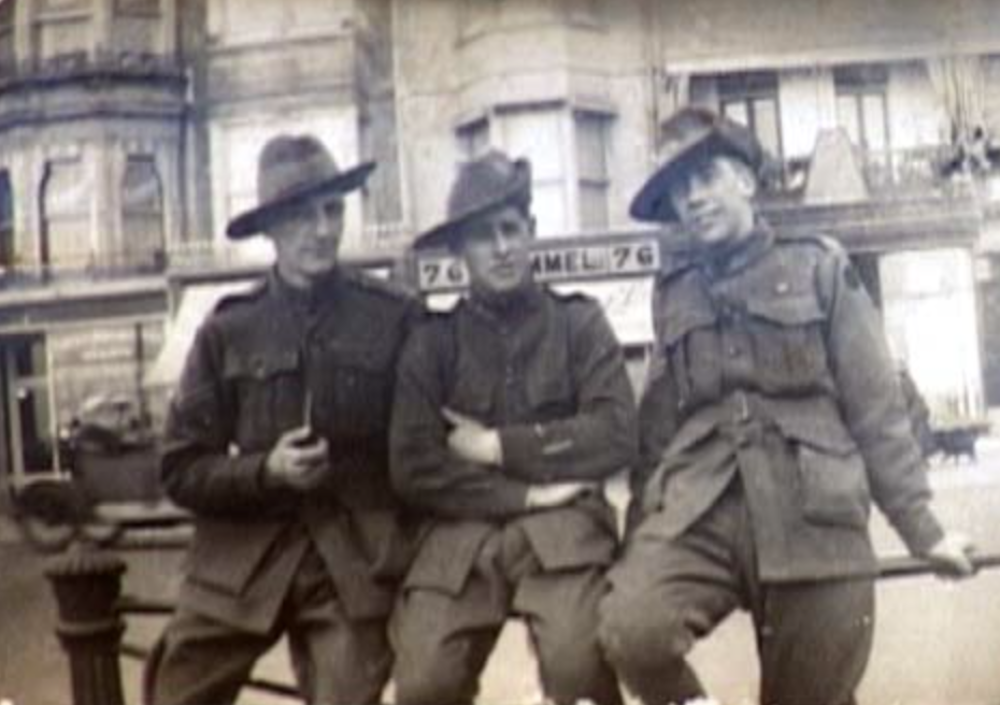
Smout was 17 years and eight months old when he joined the Australian Imperial Force in September 1915. He overstated his age by a year and eventually served with the 3rd Australian Sanitary Section of the Australian Army Medical Corps.

His duties on the Western Front included inspecting sanitation and water supplies, while periods of fighting brought first-aid and stretcher-bearing work.

At Passchendaele, Smout later recalled working for about 72 hours with little rest as casualties were moved along duckboards through deep mud. He also remembered reaching the scene after German fighter ace Manfred von Richthofen, the Red Baron, was fatally shot down in April 1918.

Coming back to Brisbane

Smout returned to Australia in 1919 after more than three years of military service. His transition back to civilian life was difficult, and he later described suffering delayed shell shock and experiencing a breakdown after coming home.

He resumed work, later moved into insurance and married Ella Stevens in 1923. The couple built a War Service Home in Clayfield and raised three children before Smout’s career and family life took him elsewhere.

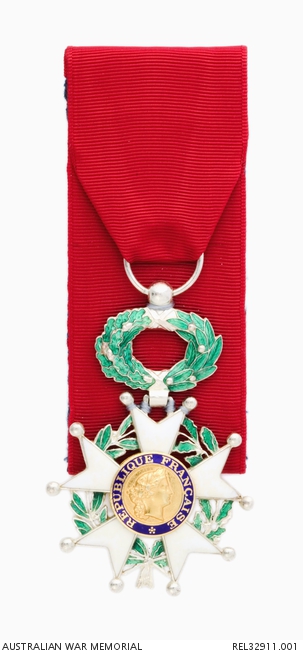
Smout remained involved in military and community service over the following decades. He received the Medal of the Order of Australia in 1978 and, at 100, was appointed a Chevalier of the Legion of Honour by France for his First World War service.

ed Smout (left) in France
Photo Credit: UNSW Canberra Australians at War Film Archive
Photo Credit: Australian War Memorial

A life spanning 106 years

Smout died in Brisbane in June 2004 at the age of 106. By then, he was Queensland’s last surviving veteran of the First World War.

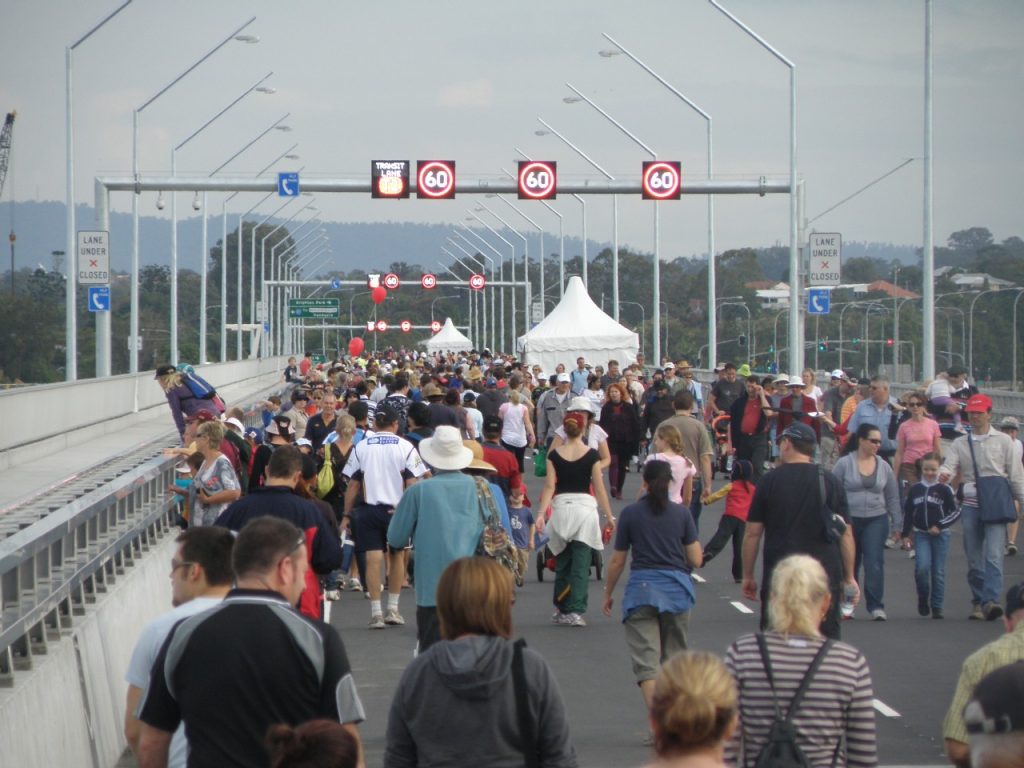
His name was later given to the 2.74-kilometre Ted Smout Memorial Bridge across Bramble Bay between Brighton and Clontarf, which opened in 2010.

Opening Day, Ted Smout Bridge
Photo Credit: Wikipedia/CC BY-SA 3.0

Kangaroo Point holds a much earlier chapter of that 106-year life. Before the battlefields, medals and memorials came a local state school and a boy willing to walk miles barefoot for another chance at its top academic prize.

Published 28-Sept-2026

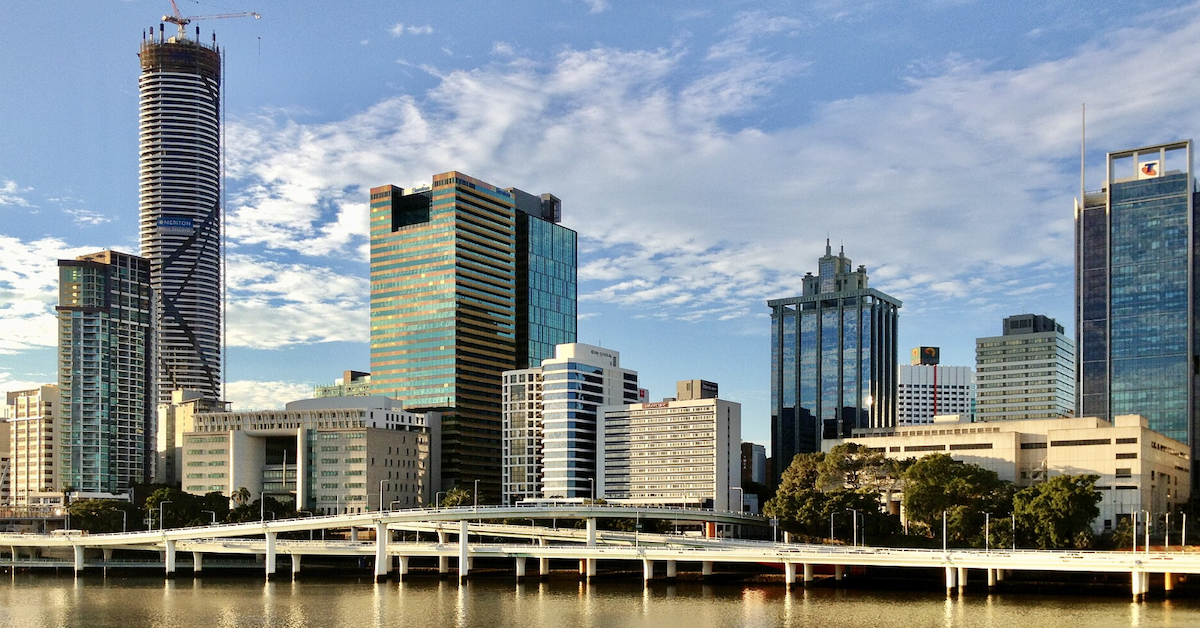
Riverside Expressway at 50: The Vital Road Beside Kangaroo Point

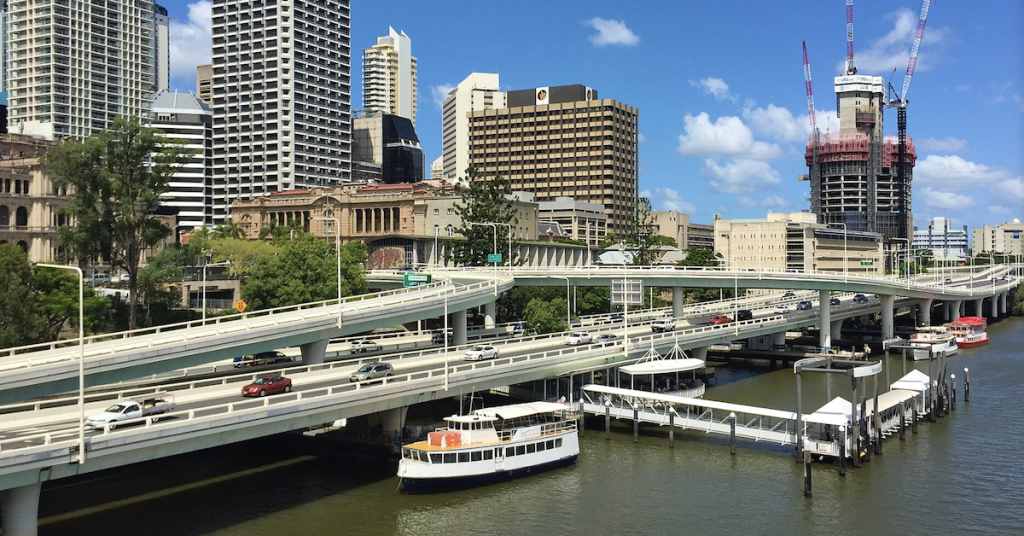
At the southern tip of Lower River Terrace, a network of walking paths and parklands quietly unfolds beneath the towering concrete belly of the Captain Cook Bridge. Above, thousands of motorists hustle along the M3, crossing the Brisbane River directly into the mouth of the Riverside Expressway.


This specific junction is where the leafy riverside of Kangaroo Point collides with one of Brisbane’s busiest transit corridors.

On 22 July 2026, the Riverside Expressway officially marks its 50th anniversary. While the vast majority of this elevated highway hugs the edges of the CBD, its southern terminus is permanently anchored to Kangaroo Point via the Captain Cook Bridge.

For residents, cyclists, and pedestrians, this massive infrastructure isn’t a distant freeway; it is a towering neighbor built right alongside their riverfront boardwalks, parks, and apartment complexes.

The Motorway Meets the Suburb

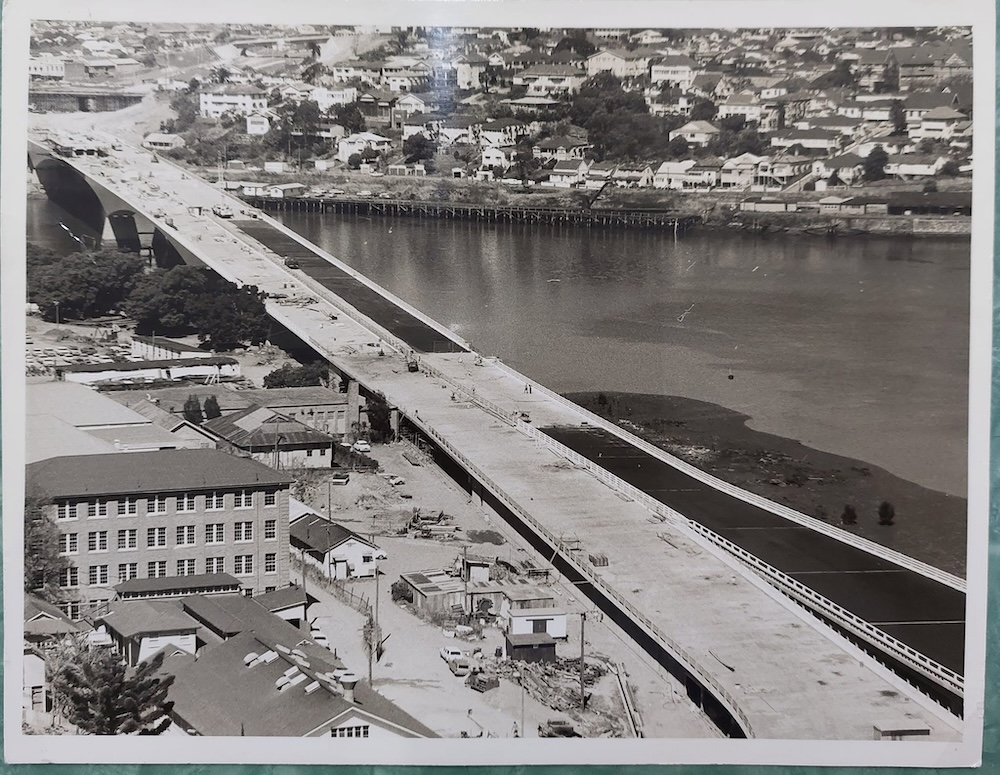
The Captain Cook Bridge serves as the critical link, carrying the Pacific Motorway over the water and depositing it straight onto the Riverside Expressway. While the bridge opened first in 1972, the completion of the expressway four years later forged an unbroken highway system across the city’s edge.

This physical footprint roots Kangaroo Point firmly in the expressway’s 50-year history. The infrastructure doesn’t just affect local commuters; it actively reshapes the suburb’s landscape. The Kangaroo Point Bikeway snakes from Thornton Street right up to the bridge, where it meets the popular Cliffs Boardwalk winding from the Riverlife Adventure Centre.

This tight wedge of land on Lower River Terrace is a masterclass in shared urban space. It serves as the northern launchpad for Veloway 1 (V1)—the major dedicated bicycle highway running south—meaning that within just a few square meters, a major interstate motorway, dense residential apartments, and vital recreational corridors all coexist.

A Radical Plan to Beat 1960s Gridlock

By the mid-1960s, Brisbane’s narrow inner-city streets were choking under a growing volume of automobiles. To solve the crisis, American consulting engineering firm Wilbur Smith and Associates drafted the groundbreaking 1965 Brisbane Transportation Study. Their solution was to bypass the inner-city grid entirely by building an elevated expressway right over the Brisbane River.

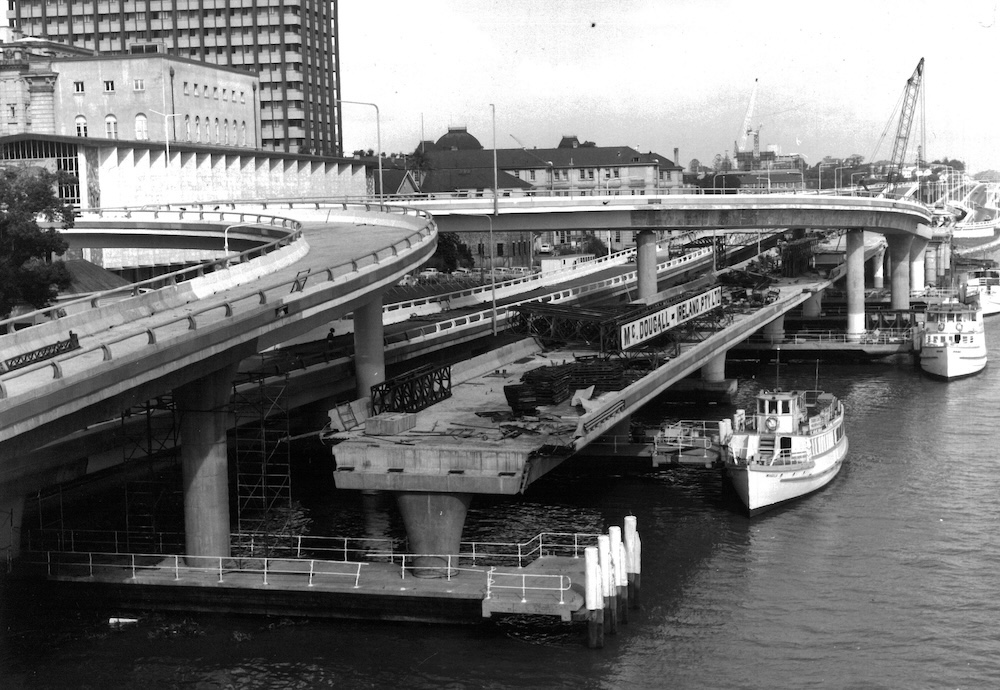
Construction kicked off in 1968, a massive engineering feat that slowly draped concrete spans along the northern riverbank. On 22 July 1976, Queensland Governor Sir Colin Hannah officially opened the final 1.4-kilometre leg to a crowd of 300 guests.

Photo Credit: 100 Years TMR
Photo Credit: Alison Greer/Facebook

The ambitious $37 million project wasn’t without controversy. During the opening ceremony, a small band of conservationists staged a protest from the riverbank below. According to State Library of Queensland records, a Main Roads truck was deliberately parked in front of the demonstrators to block their signs from view—prompting the protesters to simply pick up their banners and march to a more visible spot.

The 2006 Closure: When the City Stooped to a Halt

Because Kangaroo Point shares such intimate space with the corridor, any hiccup on the expressway instantly reverberates through the suburb’s local streets. This vulnerability was starkly exposed during an emergency shutdown in October 2006.

During routine maintenance, inspectors discovered misaligned deck sections and a hairline 0.04-millimeter crack on the Ann and Alice Street ramps. Erring on the side of caution, authorities immediately shuttered the expressway between Elizabeth and Hale streets. While the main lanes reopened three days later once engineers deemed the structure underneath safe, the brief closure triggered an absolute gridlock:

  • Local Bottlenecks: A subsequent network analysis report revealed that traffic skyrocketed by 19 per cent at the intersection of River Terrace and Main Street in Kangaroo Point as drivers scrambled for alternative routes.
  • The Wider Ripple: Gridlock bled across the city onto Coronation Drive, Bowen Bridge Road, and various river crossings, while traffic on the Pacific Motorway itself plummeted as drivers actively avoided the city.
  • Mass Commuter Detours: An estimated 41,000 commuters had to alter their daily routines. Drivers delayed, staggered, or cancelled trips entirely, while thousands abandoned their cars to walk, cycle, or catch trains and buses.

Astonishingly, 40 per cent of those caught in the chaos didn’t even plan on crossing the river. The crisis proved that when the expressway goes down, local suburban streets bear the brunt of a gridlocked city.

Fifty Years of Coexistence

The sheer volume of traffic highlights the corridor’s immense role in Brisbane’s daily life. State data from 2019 indicated that the Captain Cook Bridge was already carrying over 120,000 vehicles every single weekday, cementing it as one of the state’s busiest structures—a number that has only climbed as Brisbane approaches the late 2020s.


As Brisbane celebrates 50 years of the Riverside Expressway on 22 July 2026, the anniversary carries a unique meaning for Kangaroo Point. It isn’t just a celebration of civil engineering or commuter convenience; it marks a half-century of a suburb intimately sharing its borders, its air, and its riverfront with the beating heart of Brisbane’s transit network.

Published 14-July-2026